The time is now
Lemurs are the most endangered mammals on Earth

about
Duke Lemur Center
Founded in 1966 on the campus of Duke University in Durham, NC, the Duke Lemur Center is a world leader in the study, care, and protection of lemurs—Earth’s most threatened group of mammals.
With more than 200 animals across 13 species, the DLC houses the world’s most diverse population of lemurs outside their native Madagascar.
Want to visit? We’d love to host you! Just note that tour reservations are required in advance.
Our Mission
To advance science, scholarship, and biological conservation through non-invasive research, community-based conservation, and public outreach and education.
Facebook Feed
The honeybee twins may be almost seven months old, but Melissa and Karl still have so much of the forest to explore 🐝🐝
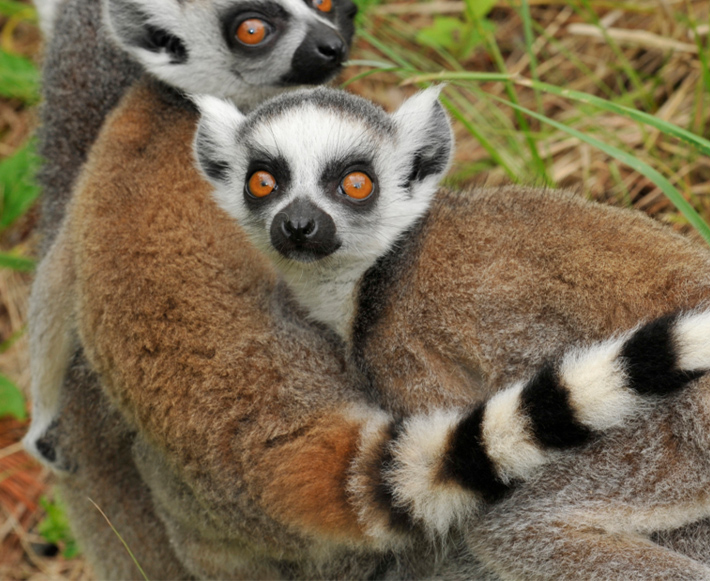
Under the careful watch of mom Liesl, dad Schwepps, and big sister Hedwig, ring-tailed lemur twins Karl and Melissa continue to bounce about their 16-acre forest enclosure, sampling fresh leaves and chasing one another from tree to tree. Tours have also spotted Karl starting to use his wrist scent glands to mark trees, likely thanks to observing his dad doing the same. Ring-tailed lemurs don't reach their full size until about one and a half years old and aren't sexually mature until ages two to three, so these rambunctious rascals have plenty of youthful energy to expend! 🍃
📸: Sara Nicholson ... See MoreSee Less
4 CommentsComment on Facebook
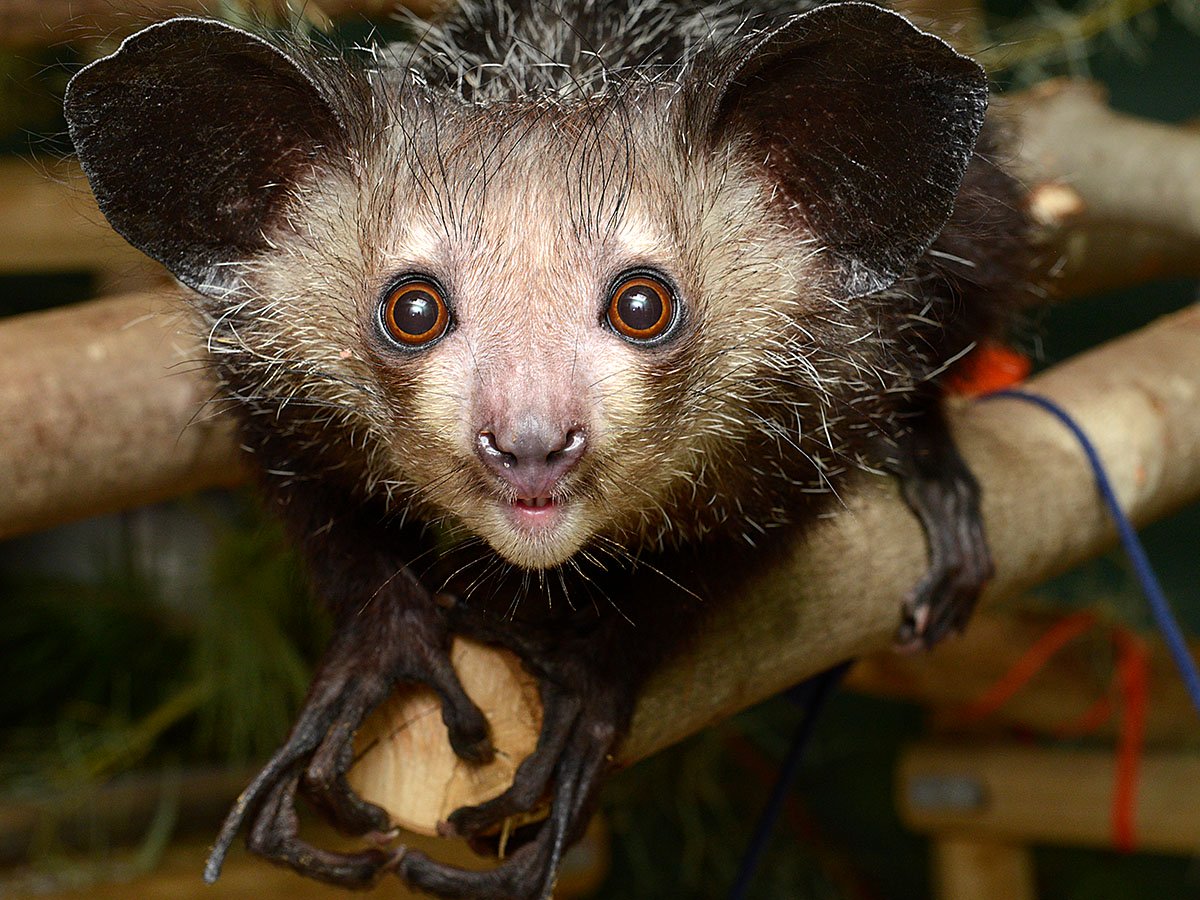
Some recent photos of aye-ayes Aloka, Binx, Ardrey, and Nirina 😍
Unlike other lemurs, aye-ayes have rodent-like incisors that can chew through almost any substance! Our keepers hide desirable treats, like worms, inside of things like wood or bamboo to encourage the aye-ayes to use those strong teeth the way they would in the wild. The steel bolts that you can see in the second photo help us make sure that our aye-ayes' structural enrichment stays upright, since steel is one of the few materials stronger than aye-aye incisors 😁
📸: David Haring ... See MoreSee Less
8 CommentsComment on Facebook
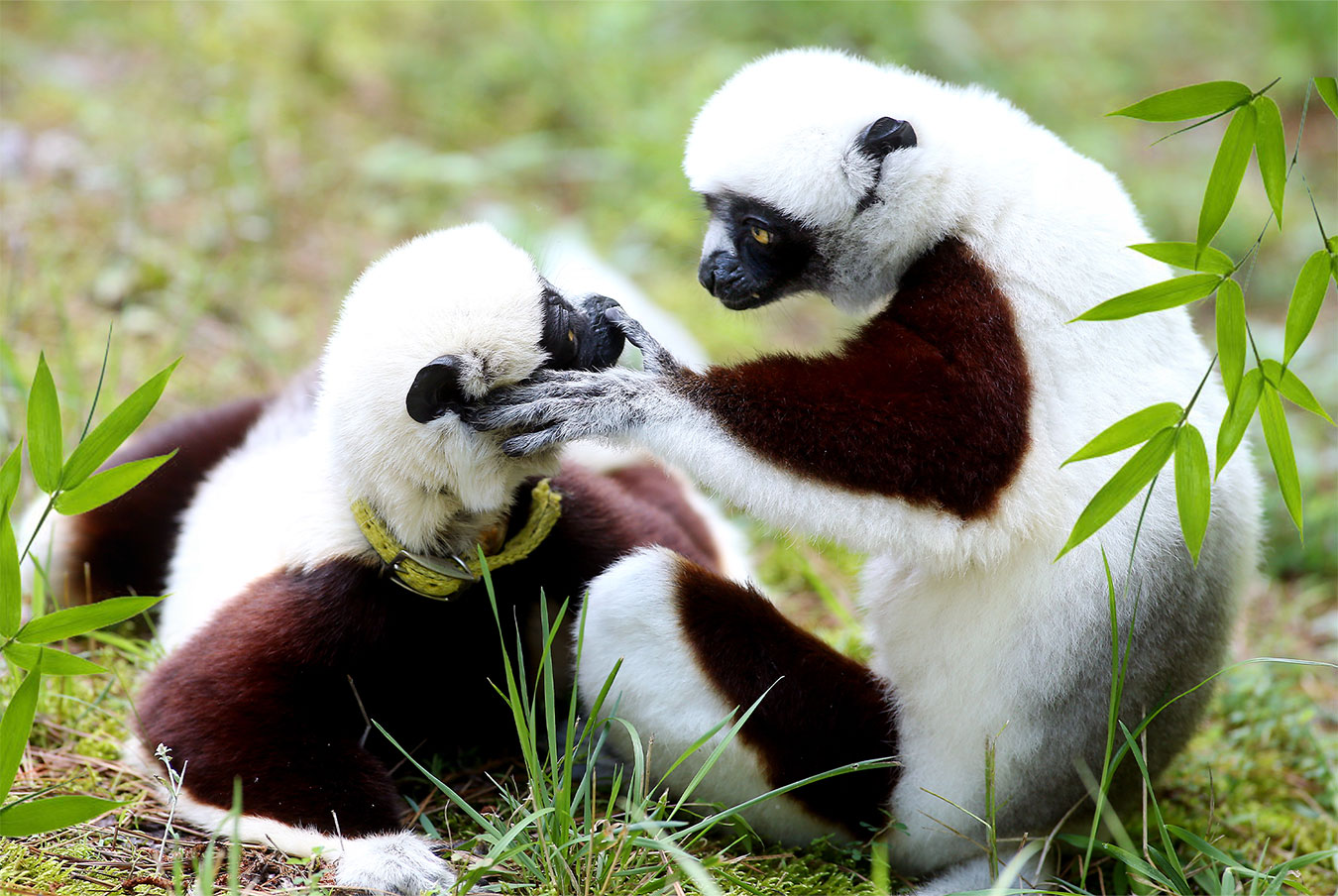
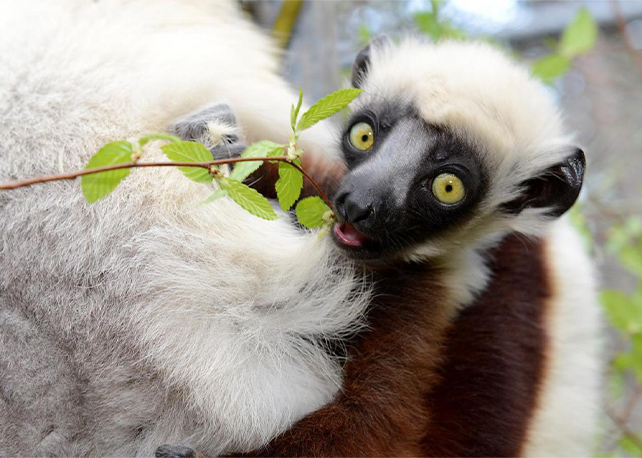
Coquerel's sifaka Gisela shows off the most efficient way to snack on lespedeza 🌿
Whether it's mimosa, sweetgum, tulip poplar, winged sumac, muscadine grapevine, or anything else that's green and grows in the woods, Coquerel's sifakas like Gisela and Pomona are fiends for leaves! As folivores, they need to eat fresh leaves every day of the year to stay healthy. Sifakas who live at the Duke Lemur Center still need to eat leaves during the winter, so the DLC's husbandry team harvests and freezes plenty of winged sumac to sustain our sifaka population through North Carolina's colder months 🍃
🎥: Abby Flyer ... See MoreSee Less
6 CommentsComment on Facebook
One of the most inspiring sights in our program is watching women's groups lead restoration activities 🌱
These women are not only growing seedlings. They are growing opportunities, confidence, and stronger communities.
One woman told us, “The land was broken before, but because I used new techniques and we invested our efforts, the land is improving.”
Across our partner communities, women are leading restoration, agriculture, microfinance savings groups, family health initiatives, and environmental education.
The future of conservation in Madagascar depends on empowering local leaders, and these women are already showing us what that future looks like.
Our conservation program in Madagascar is funded entirely by grants and donations, and we are especially grateful to the McQuade Foundation and General Mills, as well as private philanthropists who make this work possible.
💚
#WomenLedConservation #Madagascar #Leadership #WomensEmpowerment #DecadeOfRestoration #SustainableLivelihoods #EcosystemRestoration #Agroecology #RegenerativeAgriculture #MadagascarMonday ... See MoreSee Less
4 CommentsComment on Facebook
Did you know that today is World Tourism Day? 🌍
Many visitors come to Madagascar hoping to see lemurs. They leave inspired by the Malagasy people.
Whether meeting farmers restoring degraded landscapes, students learning about biodiversity, or communities leading conservation initiatives, visitors quickly discover that Madagascar's greatest strength is its people.
Conservation tourism creates powerful connections between people, cultures, and nature. Every visitor who leaves with a deeper appreciation for Madagascar becomes an ambassador for its extraordinary biodiversity.
At the Duke Lemur Center, we lead a two-week adventure to Magical Madagascar in partnership with Duke Travels, with our own Conservation Director Dr. James Herrera hosting the trip. Consider signing up for one of our future trips to for an experience of a lifetime.
🐒✈️🌿
#WorldTourismDay #Madagascar #Lemurs #Ecotourism #Conservation ... See MoreSee Less
1 CommentsComment on Facebook
Coquerel's sifakas Gisela and Pomona enjoy a beautiful afternoon in the forest 🌿
Did you know that 14-year-old Gisela is the daughter of Jovian, the lemur who played the titular Zoboomafoo? That means her eight-month-old daughter, Pomona, is Zoboomafoo's granddaughter! 😱
➡️ lemur.duke.edu/adopt
Want to keep up with this gorgeous family? You can symbolically adopt Gisela through our Adopt a Lemur program! Adopters get quarterly updates on the family, as well as access to adopter-exclusive materials, printable photos, and more! All purchases contribute to the care and conservation of lemurs, so it makes the perfect gift to yourself or a loved one ✨
📸: Keeper Sarah M. ... See MoreSee Less
7 CommentsComment on Facebook
Red ruffed lemur Buzz and his family enjoy the sunshine in their forest enclosure ☀️
Ruffed lemurs have fluffy coats as an adaptation for living in the tropical rainforests of eastern Madagascar. As canopy dwellers, wild ruffed lemurs regularly need to withstand heavy rainfall, and their fluffy fur acts as a built in raincoat to keep them from getting soaked to the bone 😎
📸: Sara Nicholson ... See MoreSee Less
18 CommentsComment on Facebook
Three-month-old mongoose lemur Paloma enjoys a baby-sized bite of apple 🍎
Paloma continues to gain independence from mom Bonita! While she still enjoys curling up in mom's lap for nursing and napping, Paloma spends most of her time hopping around her enclosure, exploring her surroundings, and growing more confident in her own abilities. She eagerly snacks on solid foods during mealtime, including primate chow and small chunks of fruit and veggies 😋
Want to contribute to the care and conservation of critically endangered lemurs like Paloma? Visit our website and learn how your can make an impact at lemur.duke.edu/donate 💙
🎥: Lead Keeper Madison ... See MoreSee Less
8 CommentsComment on Facebook
This year, communities working with the Duke Lemur Center in northeast Madagascar planted over 100,000 trees 🌳
100,000 opportunities to stabilize soils.
100,000 opportunities to restore watersheds.
100,000 opportunities to create habitat.
100,000 reasons to believe that restoration at scale is possible.
When people ask whether environmental recovery can happen, these communities have a clear answer:
Yes.
🌱
We are so grateful to General Mills for funding our restoration program for the last 6 years, as well as private philanthropists who make this work possible. Have you heard about our goal to raise $25k for restoring lemur habitats? A generous supporter is offering $25k IF we can match it!
➡️ gifts.duke.edu/lemur -->Madagascar Programs 🍃
#MadagascarMonday #Restoration #Hope #ConservationOptimism #DecadeOfRestoration #CommunityLedConservation #nature #forest #PeopleAndNature ... See MoreSee Less
5 CommentsComment on Facebook
Glamor shots of gray mouse lemur ladies Tumbleweed, Taro, and Cattail 😎
Despite weighing about as much as a stick of butter and standing about 3 inches tall, gray mouse lemurs are more closely related to humans than mice! Like all lemurs, these little critters are strepsirrhine (wet-nosed) primates who share over 90% of our DNA 🧬
➡️ lemur.duke.edu/mouse-lemurs-alzheimers-hypothesis
Like humans, mouse lemurs can develop symptoms of neurological disorders similar to Alzheimer’s disease and dementia. Past research on such diseases has been conducted on lab rats and mice, but mouse lemurs—being much more similar to humans genetically—show more promise for breakthroughs in neurological aging research 😱
In 2017, non-invasive research on the DLC’s tiniest primates has led to the development of a new Alzheimer’s hypothesis. If the hypothesis holds up, it could help identify people at risk sooner, before they develop symptoms, or point to new ways to delay onset or slow progression of the disease. Read more on our website! 🌟
📸: David Haring ... See MoreSee Less
10 CommentsComment on Facebook